Asset records
Clear aerial records for assets, structures and hard-to-reach areas.
 Contact Operations
RTK aerial surveys, orthophoto mapping, volumetrics and infrastructure inspection — with Pr.Eng (ECSA) sign-off where your project demands it.
Some sites need more than photos. They need records that can support decisions, reporting and asset planning.
Where formal reporting is needed, Parallax Aero can support the work with professional engineering and survey backing.
Inspection outputs, site records and survey support for teams that need clear information from above.
Clear aerial records for assets, structures and hard-to-reach areas.
Aerial site views for planning, access and layout checks.
Repeatable records for projects, worksites and maintenance areas.
Post-fire, post-flood or post-incident views for follow-up.
Inspect risky or awkward locations without unnecessary access risk.
Useful site information for your internal records or formal reports.

Accuracy is a function of the sensor, the airframe carrying it and the reference station anchoring it to your coordinate system.
Airframe · long-endurance survey platform
The aircraft that carries the LiDAR sensor. Longer endurance means fewer battery swaps per site — a full survey block covered in one mobilisation rather than three.
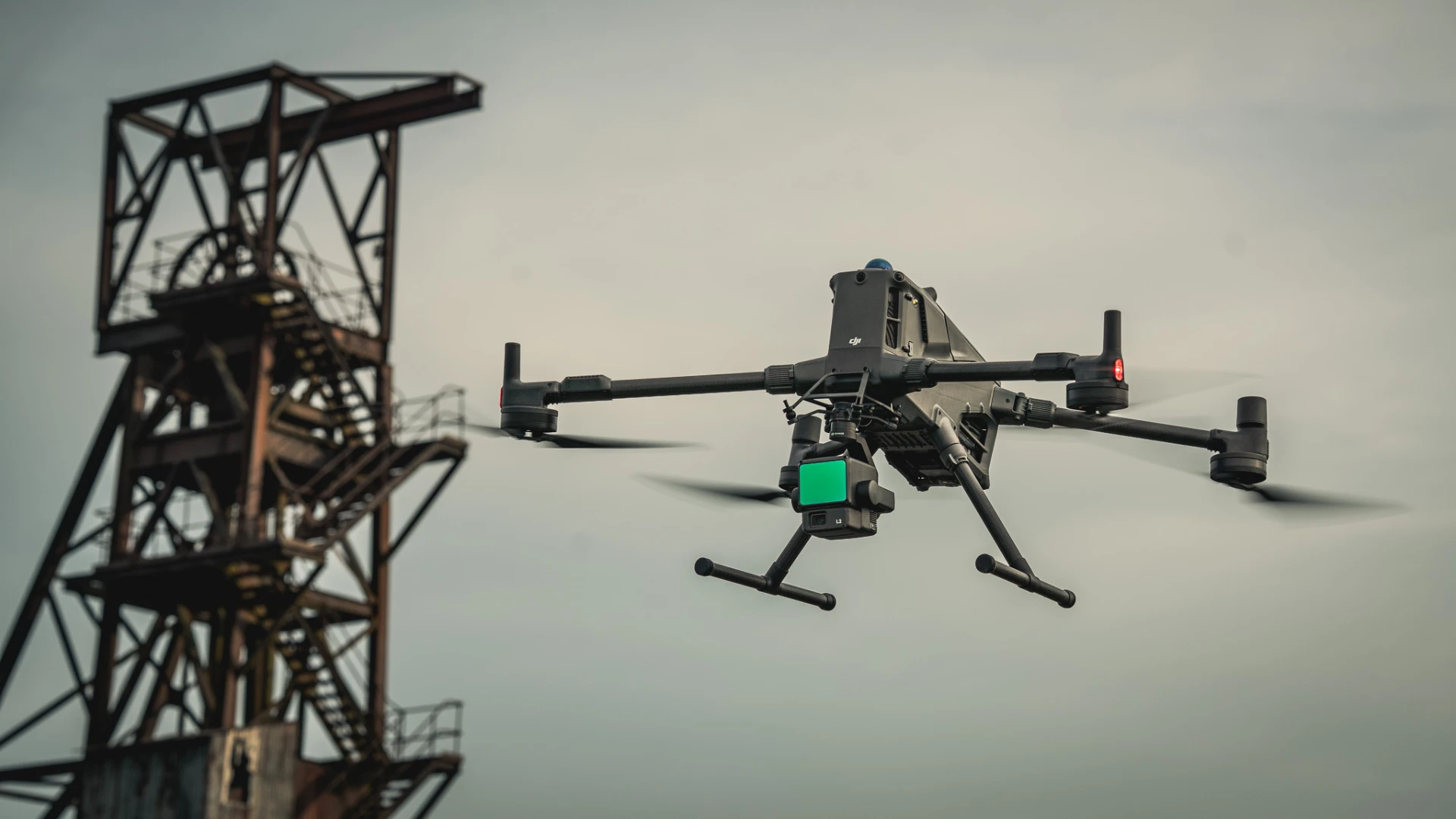
DJI Matrice 400 with Zenmuse L2 mounted
Payload · LiDAR and RGB mapping sensor
LiDAR measures the ground, not just the canopy. Multiple returns per pulse let the beam penetrate vegetation, so bare-earth terrain models come out of bush, grass and plantation where photogrammetry alone cannot see through.
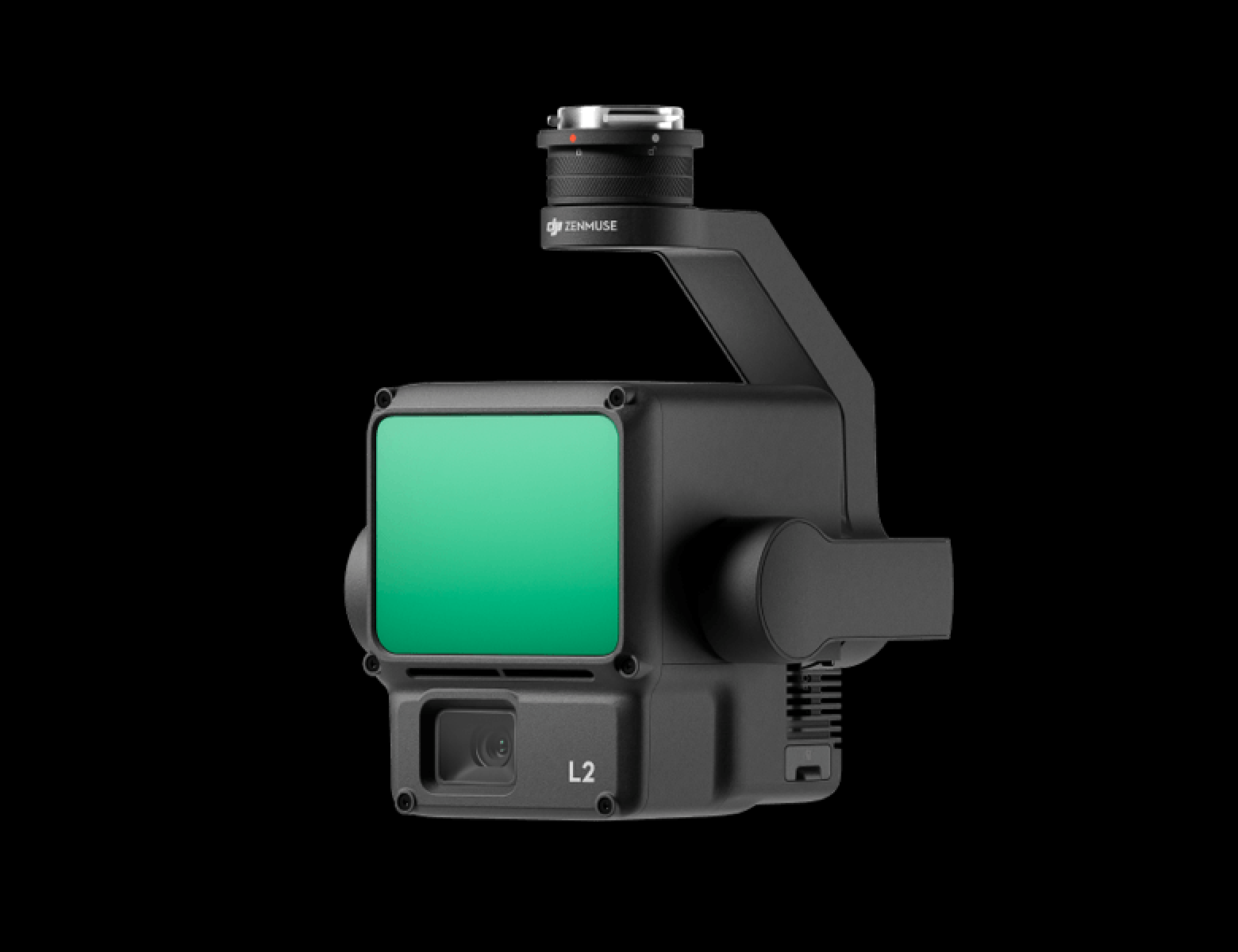
Zenmuse L2 — LiDAR and RGB payload
Photogrammetry · orthophotos, 3D models and volumetrics
Where LiDAR measures, photogrammetry photographs. The 4E carries a mechanical-shutter mapping camera, so images stay geometrically true at speed — no rolling-shutter smear to propagate into the model. It is the faster, lighter option on open ground where vegetation penetration is not the problem.
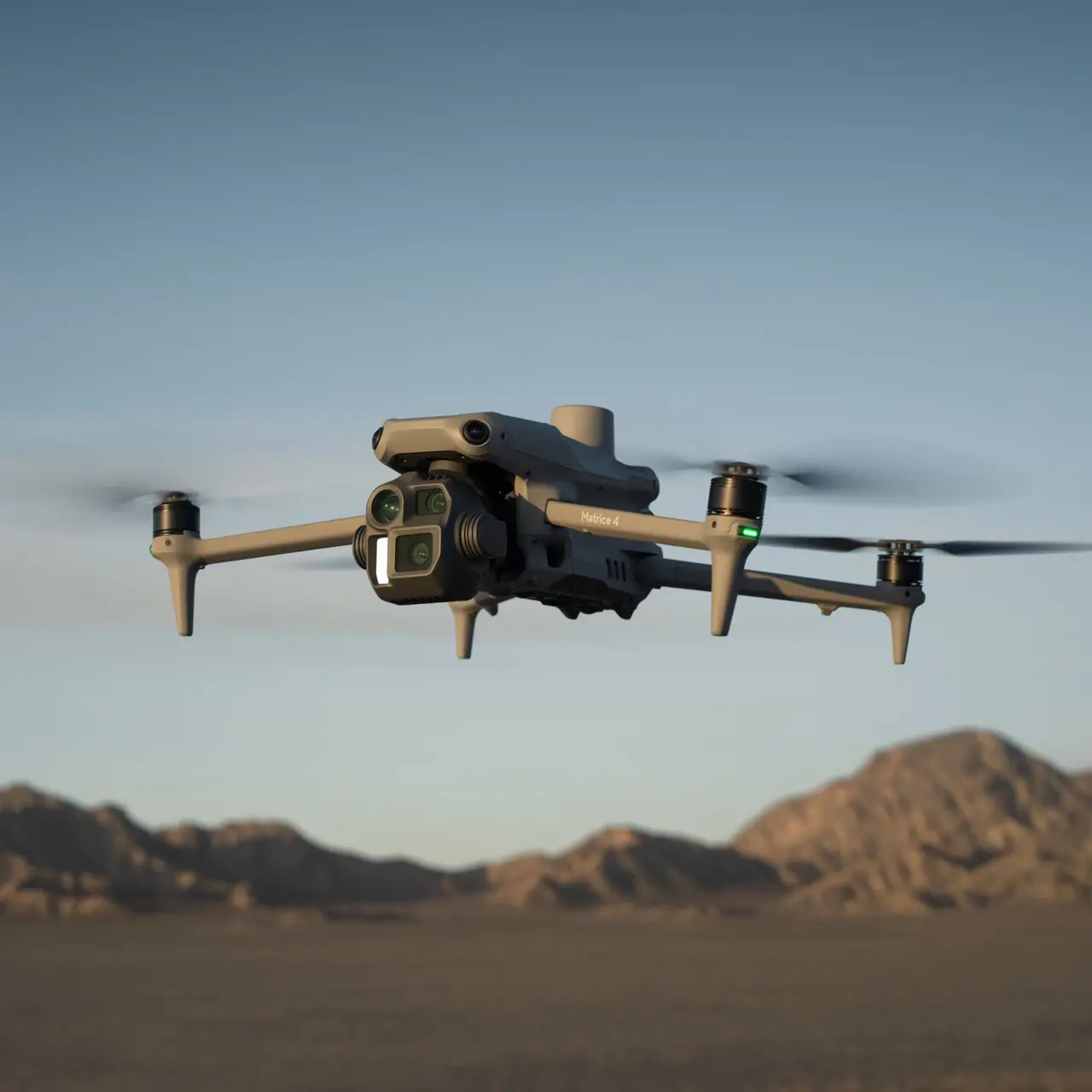
DJI Matrice 4E — mapping aircraft
Ground reference · RTK base station
The base station turns relative measurements into absolute coordinates. Set on a known point on site, it corrects the aircraft's position in real time — the difference between a model that looks right and a survey you can build from.
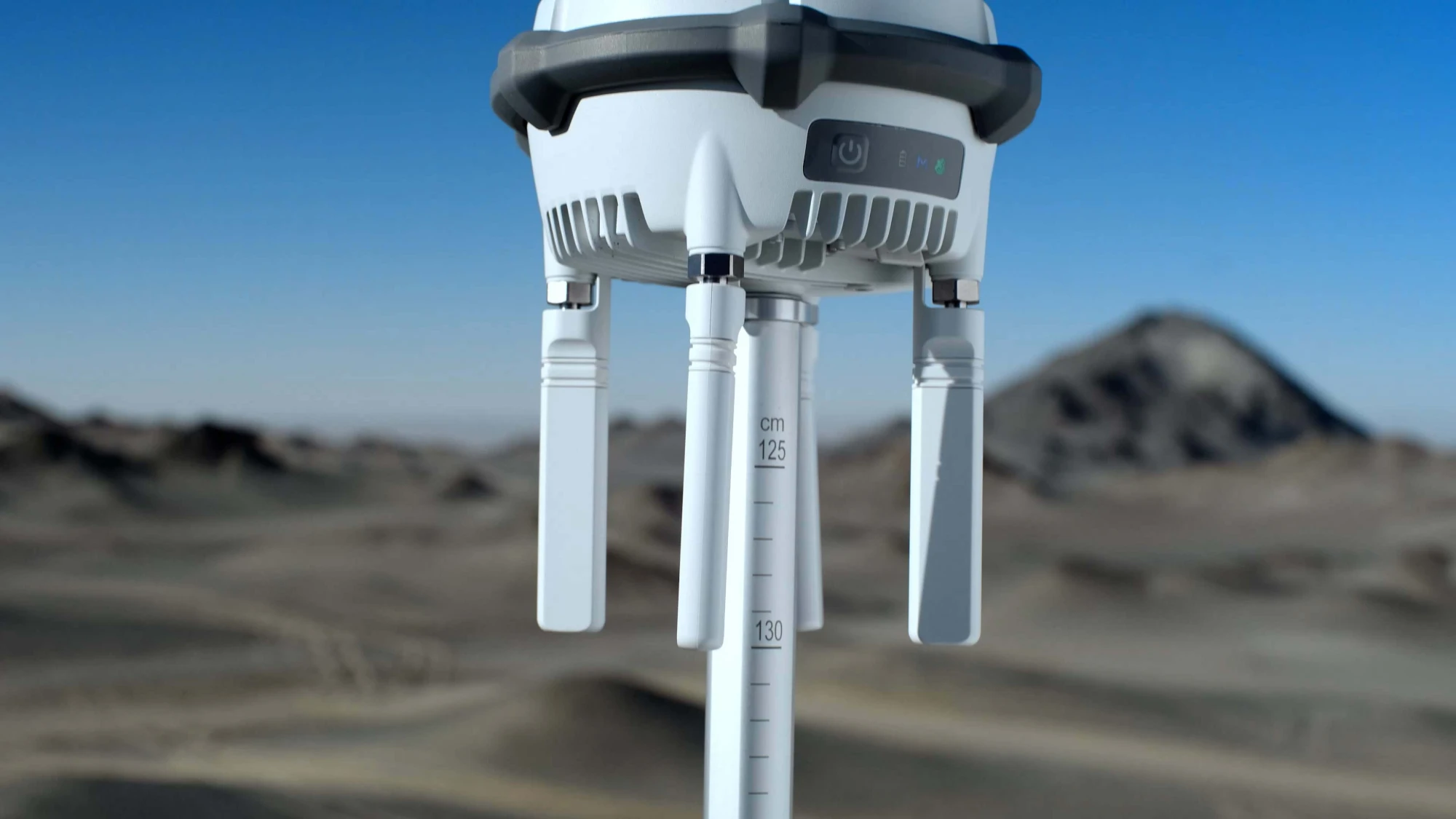
D-RTK 3 deployed on a survey tripod
Routine site records, progress flights and inspection imagery don’t require professional certification, and we won’t add cost where it isn’t needed. When a project does need it — a council submission, an insurance claim, a matter headed for court — we can bring in a registered Professional Engineer (Pr.Eng, ECSA) or a Professional Surveyor registered with the SA Geomatics Council to review and sign off the deliverable. Tell us what the report has to stand up to and we’ll scope it accordingly.
What engineers, contractors and municipalities ask before commissioning aerial work.
An RTK-equipped survey drone, flown correctly with ground control, typically achieves centimetre-level horizontal accuracy — enough for engineering design, earthworks and volumetric work. Achieved accuracy depends on flight height, image overlap, the quality of the GNSS correction, and the number and distribution of ground control points. LiDAR payloads are specified separately: a current aerial LiDAR sensor is typically quoted around 4 cm vertical and 5 cm horizontal at 150 m range. Whatever the method, the deliverable should state the accuracy actually achieved and how it was verified against independent check points. A survey that does not report its accuracy cannot safely be relied on for design.
Cost depends on site size, terrain, the accuracy specified and the deliverables produced. For sites larger than a few hectares a drone survey is usually significantly faster and cheaper than a conventional ground-only survey, because days of fieldwork compress into hours of flying and much of the processing is automated. The variables that move the price most are the accuracy specification, which drives how much ground control is needed; whether LiDAR is required to penetrate vegetation; and the number of separate deliverables requested. Mobilisation distance matters on remote sites. Most providers quote per site rather than per hectare, because terrain and access affect flight time more than area alone.
A drone survey captures the whole site from the air — millions of measured points, orthophotos and elevation models — in a fraction of the field time. A traditional survey measures specific points to legal or engineering precision on the ground. They answer different questions: aerial capture excels at coverage, volumes and change over time, while ground survey establishes legal boundaries, beacons and cadastral positions that aerial data cannot replace. In practice the two work together, with ground control points tying the aerial data into the same coordinate system. In South Africa, cadastral and boundary work must be certified by a Professional Surveyor registered with the SA Geomatics Council regardless of how the data was captured.
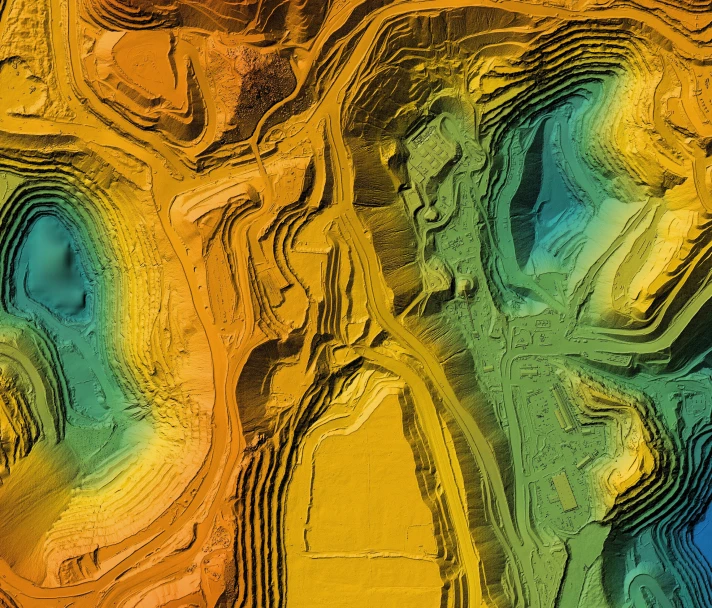
Typical deliverables are high-resolution orthophotos, contour plans, digital terrain and surface models (DTM and DSM), volumetric calculations for stockpiles and excavations, classified point clouds, and GIS-ready data in the client's coordinate system. The DTM/DSM distinction matters for earthworks: a DTM represents bare earth with vegetation and structures stripped out, while a DSM represents everything as captured. For inspection work the deliverable is usually high-resolution condition imagery, sometimes accompanied by a signed condition report. Agree the coordinate system and file formats before the flight — converting afterwards is avoidable work and a common source of error.
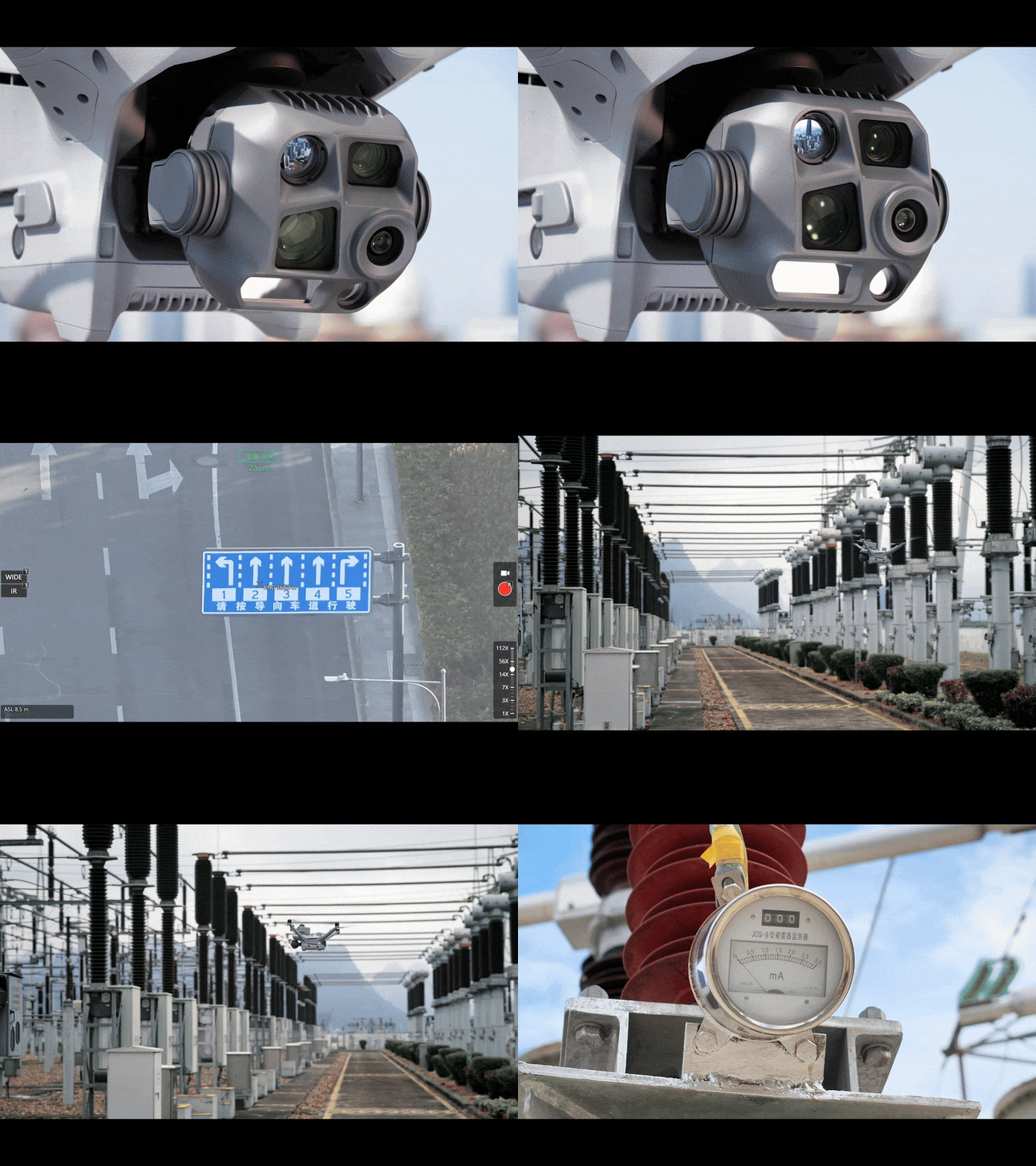
Yes. Drones suit civil infrastructure inspection because they reach positions that otherwise require scaffolding, rope access, cherry pickers or lane closures. A drone captures high-resolution imagery of bridge soffits, dam walls, spillways, towers, pylons and roofs without putting an inspector at height, and the images form a dated record that can be compared against later inspections to track deterioration. Thermal sensors add value on roofs and electrical infrastructure by revealing moisture ingress and overheating joints that are not visible to the eye. Where a finding carries legal, safety or financial weight, the imagery should be assessed and signed off by a suitably registered professional.
Send the location, asset and deliverable you need — our intake form gathers the right details so we come back with an accurate scope, not a guess. We respond within one business day.